
There is an important distinction between a surface that looks clean and a surface that is actually disinfected. Most commercial cleaning without a specific disinfection protocol achieves the first but not the second. Here is what the science says, and what your office should be doing.
Cleaning vs. Disinfecting: The Difference Matters
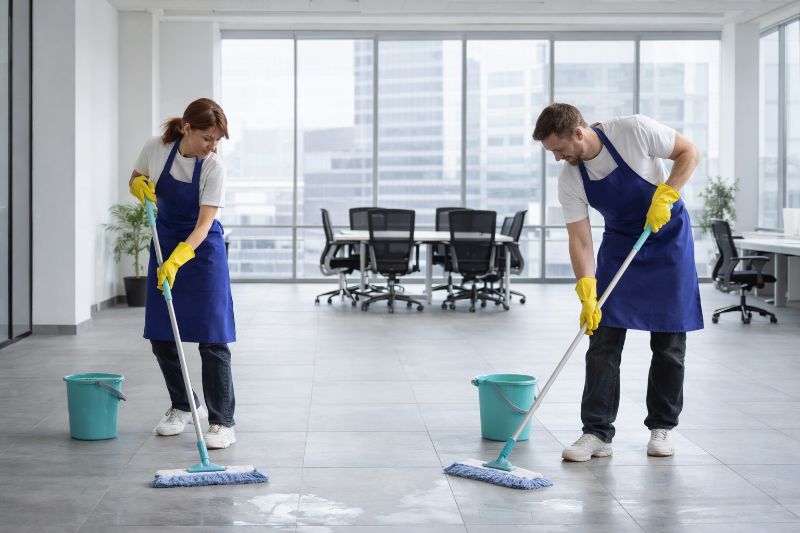
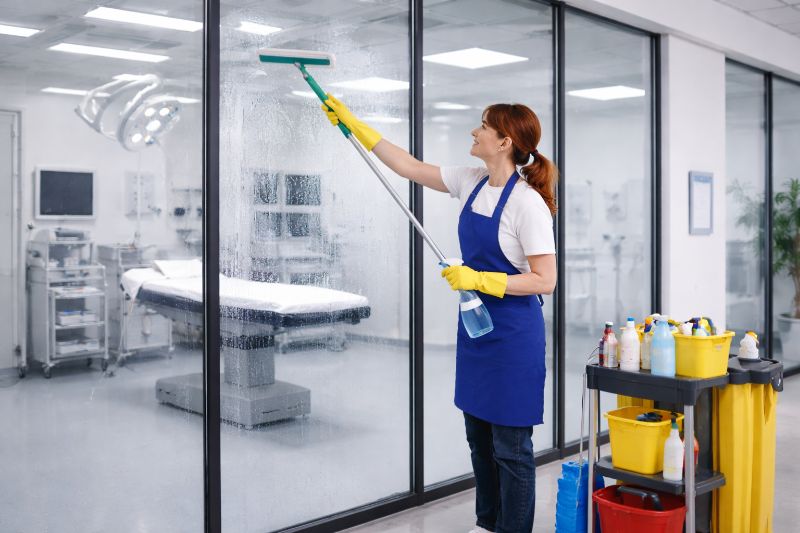
Cleaning removes visible dirt, dust, and debris from surfaces. It reduces the number of microorganisms but does not eliminate them.
Disinfecting uses chemical agents to kill bacteria, viruses, and fungi on surfaces. It requires the right product, applied correctly, with adequate contact (dwell) time.
Many offices clean without disinfecting, which means surfaces may look spotless but remain contaminated at a microbial level.
The High-Touch Point Priority List
Not all surfaces are equal infection risks. These are the surfaces that require daily disinfection, not just cleaning:
- Door handles and push plates (entry, restroom, conference rooms)
- Elevator buttons
- Light switches and electrical outlets
- Shared keyboard and mouse surfaces
- Kitchen appliance handles (refrigerator, microwave, coffee machine)
- Restroom faucet handles and flush handles
- Reception desk surfaces
Choosing the Right Disinfectant
The EPA maintains a list (called List N) of disinfectants proven effective against SARS-CoV-2 and a broad spectrum of other pathogens. Not all products marketed as disinfectants appear on this list — and appearance matters.
Key things to verify:
- EPA registration number on the label (required for genuine disinfectants)
- Dwell time — how long the surface must stay wet for the product to work (typically 1 to 10 minutes)
- Surface compatibility — some disinfectants damage electronics, painted surfaces, or natural stone
The Dwell Time Problem
The most common disinfection mistake is wiping a surface immediately after applying the product. Most disinfectants require the surface to remain visibly wet for 1 to 10 minutes to achieve their rated kill rate. If you spray and immediately wipe, you are cleaning, not disinfecting.
Your cleaning protocol should specify dwell time for each product used and train cleaners to observe it.
Frequency Recommendations
For a standard office environment:
- High-touch points: Daily disinfection minimum
- Shared workstations: After each user change
- Common areas: Daily
- Private offices: 2 to 3 times per week
- Full disinfection treatment: Quarterly, or following any confirmed illness
When to Call a Professional
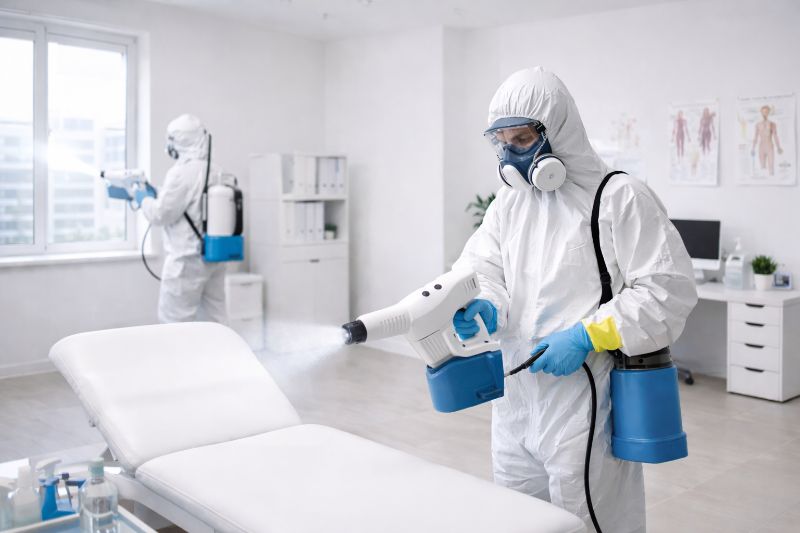
For outbreak response, suspected exposure events, or facilities with immunocompromised occupants, standard cleaning protocols are not sufficient. Professional disinfection services using electrostatic spray technology achieve 360-degree surface coverage that manual wiping cannot replicate.