

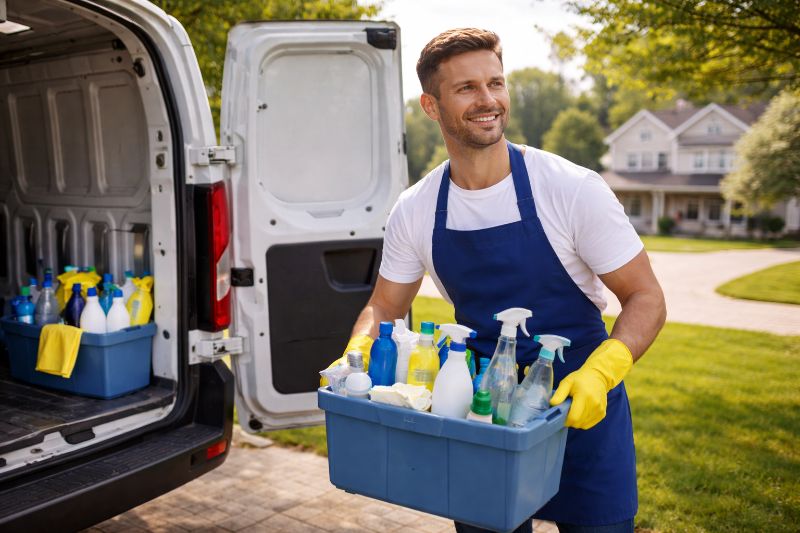
The commercial cleaning industry has historically relied on chemical products that are effective at killing pathogens but carry real costs: to the health of the people using them, the surfaces they are applied to, and the environment they end up in. Green cleaning is a response to those costs — and it has matured from a niche preference to a mainstream professional standard.
What Green Cleaning Actually Means
The term is used loosely, but in professional cleaning it typically means:
- Products certified by recognized third parties such as Green Seal, EcoLogo, or the EPA Safer Choice program
- Reduced or eliminated VOCs (volatile organic compounds), which affect indoor air quality and respiratory health
- Biodegradable formulations that break down safely after use
- Concentrated formats that reduce packaging waste and transportation footprint
- Microfiber systems that clean effectively with less chemical and water
The Indoor Air Quality Case
This is the most directly relevant argument for most businesses. Conventional cleaning chemicals — particularly those containing chlorine bleach, ammonia, and certain solvents — release VOCs into the air during and after application. In an enclosed office environment, these compounds accumulate and affect the air your employees breathe all day.
Studies have linked chronic low-level VOC exposure in office environments to headaches, respiratory irritation, difficulty concentrating, and in some cases more serious effects. Switching to low-VOC certified products measurably improves indoor air quality with no reduction in cleaning effectiveness.
Surface Compatibility
Many conventional disinfectants are corrosive to surfaces with repeated use. Certain stone countertops, wooden finishes, painted surfaces, and electronics can be damaged by chemical cleaners that are too aggressive. Green-certified products are generally formulated to be surface-safe, which means fewer damaged surfaces over the lifetime of your facility.
Cost Considerations
A common assumption is that green products cost more. For some premium formulations this is true. But for many standard cleaning tasks, certified green products are cost-competitive with conventional alternatives — particularly concentrated formats that produce more diluted solution per liter.
The calculation also changes when you account for reduced surface damage, fewer complaints from employees with sensitivities, and the growing expectation from tenants, clients, and employees that their workplace reflects responsible environmental practices.
What to Ask Your Cleaning Provider
If you want to ensure your cleaning service is actually using green-certified products (not just marketing language), ask for:
- Product name and EPA Safer Choice or Green Seal certification number
- Safety Data Sheets for the primary products used in your facility
- Confirmation of VOC content in cleaning solutions
Any reputable provider should be able to supply these without hesitation.